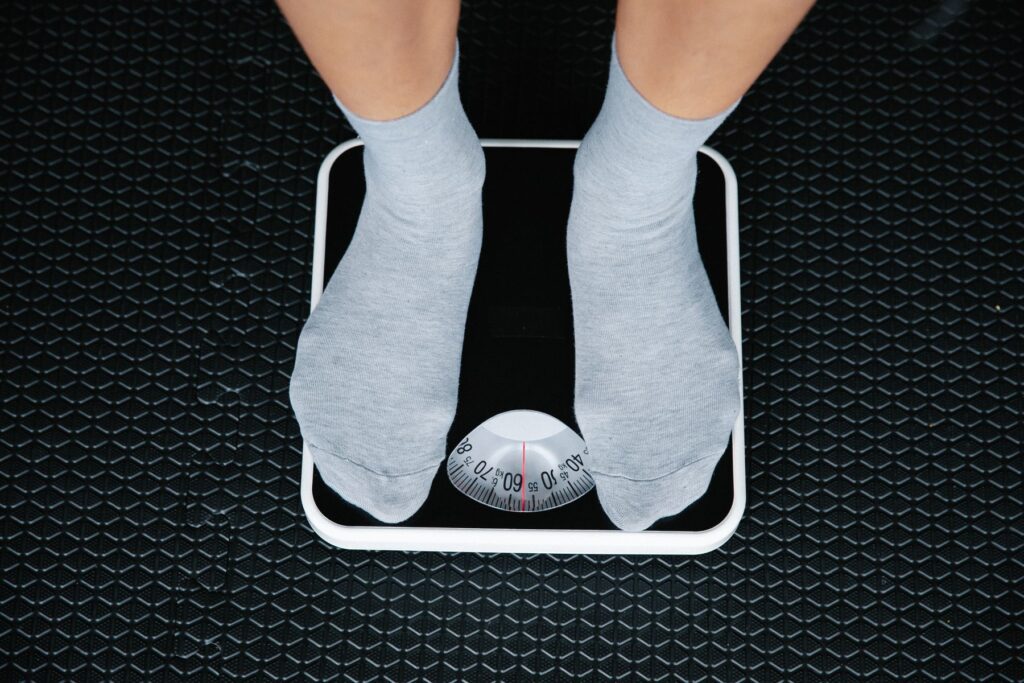
Know yournumbers.
See your BMI, body fat and waist-to-height ratio, what they mean and a healthier target for you. Then how long it could take, and the calories and protein to get there.

1Step 1Start here, takes 1 minute
Use your morning weight if you can. Results update as you type.

Fill in 5 quick details to see:
2Step 2Set your target, free
Pick one. We convert it for you.
Your normal week
3Step 3Last step: your daily calories and protein
Here is a sneak peek of your plan. Unlock it to see your own numbers, and we will email you a copy.
Free. Takes about 20 seconds.
Where should we send your numbers?
Your full calories and protein, with and without exercise, show up straight away and land in your inbox.
Knowing the numbers is the easy part. Hitting them with Malaysian food, a busy job and a family is where most people get stuck. WhatsApp me your results and I'll tell you where to start.
Dr. Omar Yunos, medical doctor and Precision Nutrition certified coach


Divide your waist (at the belly button) by your height, both in cm. Under 0.5 is healthy for men and women. 0.5 to 0.59 means extra belly fat and a higher risk of diabetes and heart disease, and 0.6 or more is high risk. The simple rule: keep your waist under half your height.
With a waist measurement we use Relative Fat Mass (RFM), a formula from your height and waist that tracks closely with body scans. Without a waist we estimate from your BMI, age and gender (Deurenberg), which is rougher. A reading from a body fat scale or InBody replaces both.
Asians carry more body fat at the same BMI, so Malaysia uses lower cut-offs than the West: normal 18.5 to 22.9, overweight 23 to 27.4, obese from 27.5 (class I to 32.4, class II to 37.4, class III from 37.5).
We take your lean mass (muscle, bone, water) and work out the weight where your body fat drops under 18% for men or 30% for women, assuming you keep your muscle. We also check your waist: about 1 cm comes off for every kg lost, so we make sure the target brings your waist under half your height. The bigger of the two wins. The target never goes below a BMI of 18.5.
Maintenance calories use the Mifflin-St Jeor equation times your activity level. The deficit is 20% of that, kept between 300 and 750 kcal a day, and we never suggest eating under 1,200 kcal (women) or 1,500 kcal (men).
Per kg of your target weight. Without exercise: 1.0 g if you are not losing weight, 1.2 g while losing weight. With exercise: 1.6 g while losing weight (the top of the 1.2 to 1.6 range, to protect your muscle), 1.6 to 2.2 g if you are building muscle. With a kidney problem: 0.6 g, or what your kidney doctor tells you.
We run your plan week by week at two paces. Fastest safe pace: a deficit of about 25% of what you burn, never more than 1% of your body weight a week. Slowest steady pace: a deficit of about 12%. As you get lighter you burn a little less, so both paths slow down over time. Your real timeline usually sits between the two.
These are estimates for healthy adults, not a diagnosis or medical advice. Not suitable if you are pregnant or breastfeeding, under 18, or have a medical condition such as diabetes, kidney disease or an eating disorder history. Check with your doctor first.